
There’s something deeply satisfying about making a great latte at home. It’s not about perfection or fancy equipment — it’s about understanding a few key steps and building good habits along the way. With fresh coffee, thoughtful technique, and a little practice, you can create café‑quality lattes right from your own kitchen.
This guide breaks down each part of the latte‑making process in a simple, approachable way. Whether you’re brand new to espresso or just looking to tighten up your routine, these tips will help you brew with confidence.
Looking for the right tools? You can explore our curated selection of brewing gear and espresso essentials to get started.
1. Start with Fresh, Quality Beans
Great coffee always starts with great beans. No amount of technique can fully make up for stale or low‑quality coffee.
Look for freshly roasted beans and try to use them within a few weeks of their roast date. Our espresso blends are roasted with balance and milk‑friendly sweetness in mind, making them a great choice for lattes. Whole beans will stay fresher longer, so grinding just before brewing is ideal. If you’re buying pre‑ground coffee, make sure it’s specifically labeled for espresso.
Fresh beans provide better flavor clarity, balanced sweetness, and a richer crema — all of which make a noticeable difference in your latte.

2. Dial In Your Grind
Grind size plays a huge role in how your espresso tastes. A quality burr grinder helps ensure consistency from shot to shot. For espresso, you want a fine grind — but not so fine that it turns powdery.
A good reference point is the texture of table salt. If your grind is too coarse, water will pass through too quickly, resulting in weak or sour espresso. Too fine, and the water will struggle to flow, leading to bitterness or harsh flavors.
Small adjustments go a long way. If your shot tastes off, tweak your grind slightly before changing anything else.

3. Tamp with Consistency
Tamping compresses the coffee grounds so water flows evenly through them. The goal here isn’t brute force — it’s consistency.
Hold the portafilter level and press straight down with steady, even pressure. An uneven tamp can cause channeling, where water finds the easiest path through the puck, leading to uneven extraction and unbalanced flavor.
A calm, repeatable tamping motion will give you more reliable results shot after shot.

4. Pull the Espresso Shot
Once your espresso is brewing, pay attention to how it flows. Pairing fresh coffee with reliable equipment can make dialing in your shots much easier. A well‑extracted shot should start slowly and then settle into a smooth, steady stream — often compared to warm honey.
If the shot runs too fast, it may taste thin or sour. If it drips slowly or stalls, it can become overly bitter. Timing can help, but visual cues and taste are just as important.
Trust your senses here — they’re some of your best tools.

5. Steam the Milk
Milk texture is what truly defines a latte. You’re aiming for silky, glossy milk with fine microfoam — not stiff foam or large bubbles.
Start with cold milk and a cold pitcher. Position the steam wand just below the surface at first to introduce a little air, then lower it slightly to heat the milk evenly. You should hear a gentle, controlled sound — not loud screeching.
The milk should feel warm to the touch but not scalding. Overheated milk loses sweetness and can taste flat.

6. Pour with Intention
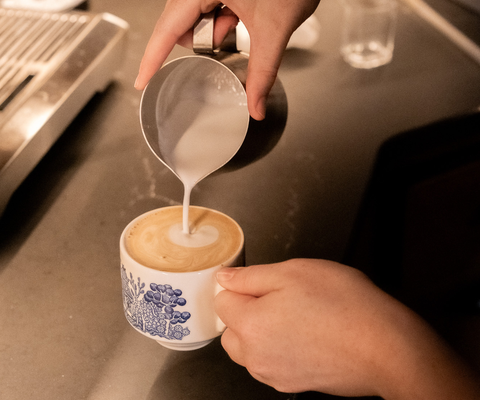
Pouring brings everything together. Start by pouring from slightly higher up to help the milk mix with the espresso. As the cup fills, bring the pitcher closer to the surface to finish.
Latte art is fun, but it’s not required. Focus instead on creating a balanced drink where the espresso and milk work together harmoniously.
A smooth pour and well‑textured milk will elevate the entire experience.

7. Enjoy the Process
Making coffee at home is about more than the final cup — it’s about slowing down and enjoying the ritual.
Each step is an opportunity to learn and refine your technique. Don’t stress about getting everything perfect right away. With practice, these small habits become second nature.
You can also browse our favorite espresso coffees and at‑home brewing gear to continue building your setup.

Here’s to better mornings, one latte at a time.


Comments (0)
There are no comments for this article. Be the first one to leave a message!